
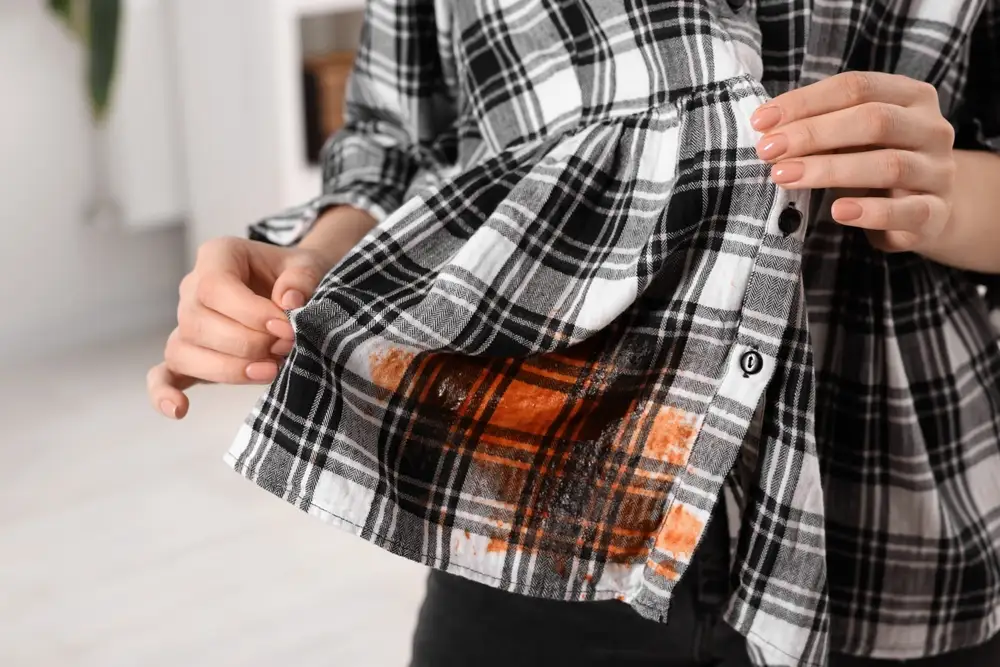
Accidental food spills can happen anytime, whether you are enjoying a meal at home, attending a party, or eating outside. Oil, curry, sauces, coffee, and other food items can leave stubborn marks on your favourite clothes.
Knowing how to remove food stains from clothes helps you maintain your garments and prevent stains from becoming permanent. However, different stains require different cleaning methods, and using the wrong product can damage delicate fabrics.
Here are some practical tips to help you handle common food stains safely.
1. Act Quickly When Food Spills on Clothes
The sooner you treat a food stain, the better your chances of removing it. Fresh stains are generally easier to manage than stains that have dried and settled into the fabric.
Use a clean spoon or blunt edge to gently remove excess food. Then blot the affected area with a clean cloth or tissue.
Avoid rubbing the stain aggressively because this can push food particles deeper into the fabric.
2. Remove Oil and Grease Stains
Oil stains from fried foods, butter, and cooking oils can be difficult to remove because grease does not dissolve easily in water.
For washable garments, gently blot excess oil with a paper towel. Use a suitable laundry detergent or fabric-safe stain remover according to its instructions.
Check the stain before drying the garment. Heat from a dryer or iron may make remaining grease marks harder to remove.
3. Clean Curry and Turmeric Stains Carefully
Curry and turmeric can leave noticeable yellow marks, especially on light-coloured clothing.
Start by gently removing excess curry without spreading it. Check the garment’s care label before selecting a cleaning product.
Use a stain remover suitable for the fabric and test it on a hidden area first. Avoid applying strong chemicals or household remedies without checking whether they are safe for the material.
Some turmeric stains may require repeated treatment, and complete removal cannot always be guaranteed.
4. Treat Tomato Sauce and Ketchup Stains
Tomato sauce and ketchup can leave coloured marks on shirts, dresses, and other everyday garments.
Remove excess sauce carefully and rinse the affected area with cool water if the care label permits. Apply an appropriate laundry detergent or fabric-safe stain treatment.
Wash the garment according to its care instructions and inspect the stain before drying.
5. Remove Coffee and Tea Stains
Coffee and tea spills can leave brown marks on clothing, particularly when they are not treated immediately.
Blot the spill with a clean cloth to absorb excess liquid. Avoid rubbing, which may spread the stain.
Use a suitable detergent or stain remover based on the fabric type. Delicate materials such as silk may need professional cleaning instead of home treatment.
6. Avoid These Common Stain Removal Mistakes
Incorrect stain removal methods can cause permanent fabric damage or make stains more difficult to remove.
Avoid these common mistakes:
- Rubbing stains aggressively.
- Using hot water without checking the fabric instructions.
- Applying bleach directly without checking compatibility.
- Mixing different cleaning products.
- Ironing or machine-drying clothes before checking the stain.
- Using the same cleaning method for every fabric.
Always read product instructions and test cleaning solutions on an inconspicuous area.
7. Protect Delicate Clothes from Stain Damage
Silk, wool, embroidered garments, designer outfits, and expensive fabrics need special attention.
Avoid experimenting with strong detergents, scrubbing brushes, or homemade cleaning mixtures. Even gentle-looking treatments may affect colour, texture, or fabric structure.
For delicate clothing or stubborn food stains, professional dry cleaning may be a more suitable option.
8. When Should You Choose Professional Laundry and Dry Cleaning?
Some stains become difficult to remove after drying or repeated washing. Heavy grease marks, old curry stains, and stains on delicate fabrics may require specialised treatment.
Professional cleaning services can assess the garment’s material and the type of stain before selecting an appropriate cleaning method.
BusyBees provides laundry and dry-cleaning services to help customers care for their everyday and special garments. Explore the available services on the BusyBees website when home cleaning methods are not suitable.
Why Choose BusyBees for Garment Care?
Managing laundry and stubborn stains can take time, especially when different clothes require different cleaning methods.
BusyBees helps make garment care more convenient through its laundry and dry-cleaning services. Whether you need routine clothing care or extra attention for stained garments, choosing the right cleaning method can help protect your clothes.
Important: Stain removal is not guaranteed. Results depend on the exact stain type, fabric, garment condition, and previous cleaning attempts. Sharing details about the stain before treatment helps determine the most appropriate cleaning approach.
Conclusion
Learning how to remove food stains from clothes can help you manage everyday spills and maintain your wardrobe. Treat stains early, avoid aggressive scrubbing, follow garment care instructions, and choose cleaning products carefully.
For stubborn stains and delicate garments, professional laundry or dry-cleaning services may be worth considering. Proper garment care helps keep your clothes looking their best for longer.